Workplace Bullying: Signs, Effects & What Employees Can Do
by Ani
Apr 5, 2026
at 11:24 AM
Workplace Bullying: Signs, Effects & What Employees Can Do
Have you ever felt that going to work is a burden not because your workload is huge, but because of the people around you who bully you? (workplace bullying)
Some like to make sarcastic remarks, some deliberately try to damage your reputation in front of your boss, and some make you feel you’re never “good enough,” even when you’ve given your best.
If this sounds familiar, this is not normal. It may be a sign of workplace bullying. In Malaysia, studies show that many employees stay silent because they are afraid of losing their livelihood, but in reality you do have clear legal protections. Read this article till the end to understand what you can do.
What Is Workplace Bullying?
Workplace bullying refers to repeated behaviour that is intended to emotionally hurt, demean, or pressure an employee, whether through verbal, physical, or psychological means.
In Malaysia, many people get confused between a “strict boss” and a “bullying boss”. Often, bullying is disguised under phrases such as:
“This is just normal work pressure”
“Boss memang garang sikit”
“This is part of our company culture”
Remember! If an action happens repeatedly, hurts your feelings, and starts affecting your mental health, it is no longer just a “work challenge” but it is bullying.
If you feel tense, afraid, or constantly not valued, it is not just “being tired from work”. These are warning signs that should not be ignored.
Many employees in Malaysia do not realise they are being bullied because they have become used to the culture of just endure it. In reality, workplace bullying has deep effects on three main areas of your life:
1. Emotional & Mental‑Health Signs
Bullying doesn’t only hurt your heart; it also affects your brain and emotions:
Severe anxiety: Feeling nervous or panicked every time you enter the office.
Loss of self‑confidence: Starting to doubt your abilities, even though you were once competent.
Overthinking: Obsessing over small things or sarcastic remarks from colleagues, to the point of disturbing your rest.
Burnout: Feeling deeply down and losing interest in work that you used to enjoy.
2. Physical Signs (Psychosomatic)
Mental stress often shows up through the body:
Insomnia: Trouble sleeping at night because you keep replaying office conflicts in your mind.
Chronic body pain: Frequent headaches, migraines, or shoulder/back pain without a clear medical cause.
Extreme fatigue: Feeling physically drained even when your workload for the day is not that heavy.
3. Signs in the Work Environment
Check whether you are often the “target” in situations like these:
Frequent scapegoating: You are always blamed for team mistakes, even when they are not your fault.
Blocked opportunities: You are denied chances to grow, or are deliberately left out of training and promotions.
Being singled out: You are watched much more closely (micromanaged) than other colleagues, with no reasonable explanation.
Important Note: If you read through this list and think, “Wait… this sounds like me,” please do not ignore it. Your feelings are valid. The first step to fighting bullying is to acknowledge that the situation is not healthy.
Effects of Workplace Bullying: Why You Cannot Just Keep “Enduring It”
Bullying is not just about “being too sensitive”. It is a serious threat that can damage your mental health, work performance, and personal happiness. Many people assume that time will heal everything, but in reality, the impact of bullying is cumulative it gets worse over time.
1. Short‑Term Effects (Immediate Impact)
These are the early reactions of your body and mind to the stress:
Severe stress: Feeling panicked or breathless every time you think about work.
Loss of focus: Hard to concentrate on daily tasks because your thoughts are constantly disturbed by bullying.
Worsening performance: Your work quality drops not because you are incapable, but because of ongoing emotional distress.
2. Long‑Term Effects (Chronic Trauma)
If bullying is left unchecked, it can lead to long‑term health problems:
Anxiety and depression: Persistent anxiety or low mood that may need treatment from a psychiatrist or counsellor.
Burnout (Emotional exhaustion): Complete loss of motivation to work or socialise.
Loss of career interest: You start to hate your job field, even though you once loved it.
3. Impact on Your Career Future
Bullying damages how you see your own potential:
“Imposter syndrome / Not good enough” mindset: You feel unqualified to apply for higher‑level roles, even when you clearly meet the criteria.
Trauma about changing jobs: Fear of moving workplaces because you worry you will face the same toxic environment again.
Feeling stuck: You feel forced to stay in a toxic environment because your self‑confidence is already broken.
The Reality…Do not be fooled by phrases like: “Tak apa, tahan saja. Nanti okey.” The longer you let yourself be bullied, the deeper the psychological scars you may have to heal later. Protect yourself before it becomes too late.
Types of Workplace Bullying That Often Go Unnoticed
Not all bullying looks obvious, like shouting or physical fights. Some forms are subtle and hard to spot, so even your colleagues may not realise it is happening. Understanding these types of bullying is important so you know when it is time to act.
1. Verbal Bullying
This is the most common type. It involves sarcasm, insults, or remarks that shame you in front of others or privately.
Example: “You can’t even handle such a simple task?” or making fun of your education background.
2. Psychological & Emotional Bullying
This involves mental manipulation or gaslighting. Making you doubt your sanity or abilities.
Example: “If you can’t handle such small pressure, maybe you’re just not cut out for this job,” which makes you feel guilty for failures that are actually someone else’s fault.
3. Social Bullying (Isolation)
This type aims to push you aside from the group and weaken the support you should have at work.
Signs: Being left out of important meetings, deliberately ignored in work group chats, or never invited to team lunches.
4. Work Related Bullying (Bullying Through Workload)
This tactic is used to systematically damage your performance.
Tactics: Giving you an impossible amount of work or giving you too little trivial work so you look unproductive or unimportant to the company.
You should know these types so you can recognise that what you are going through is not just “normal work stress”, but a form of abuse that you can and should report.
Your Rights, Workplace Bullying Act
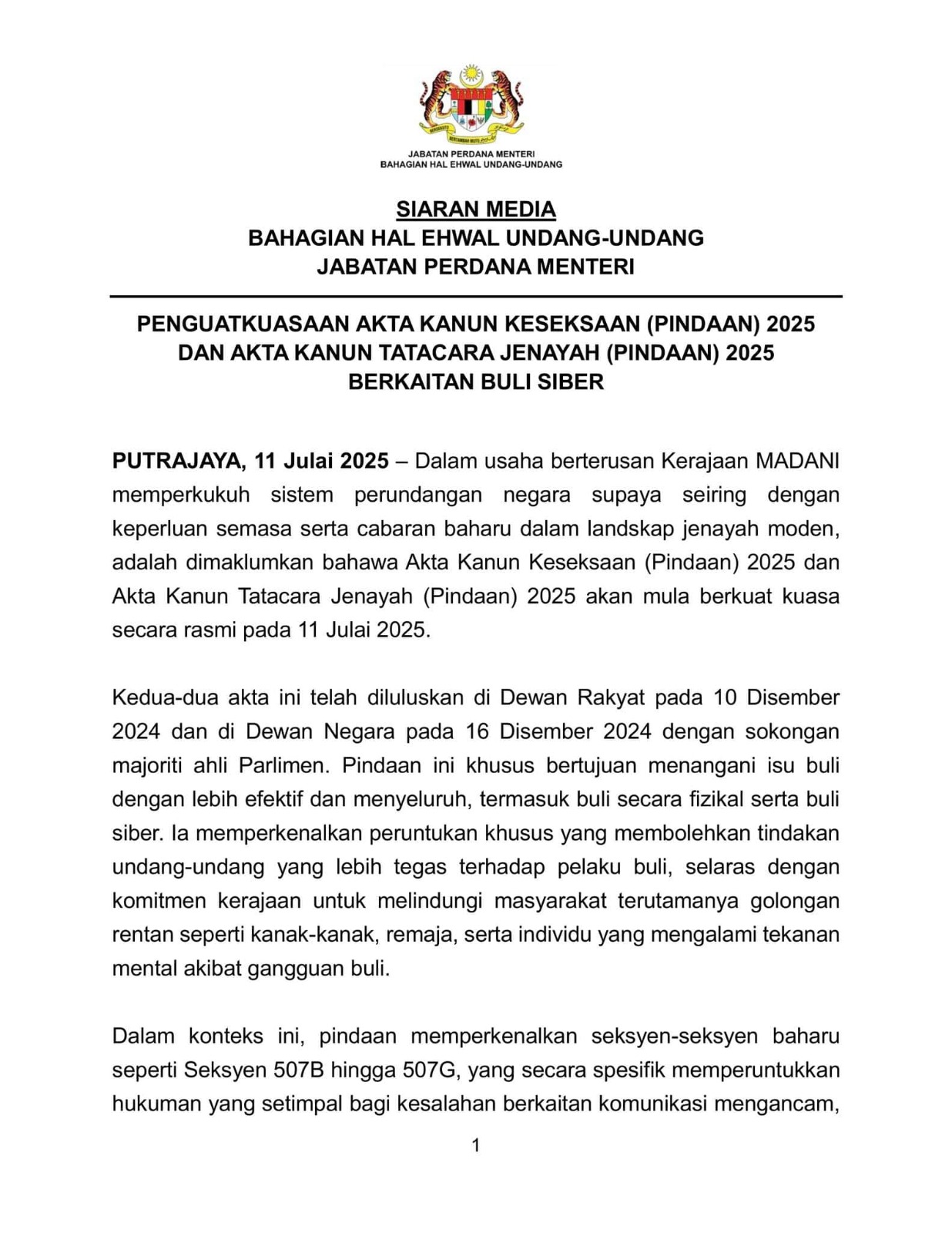
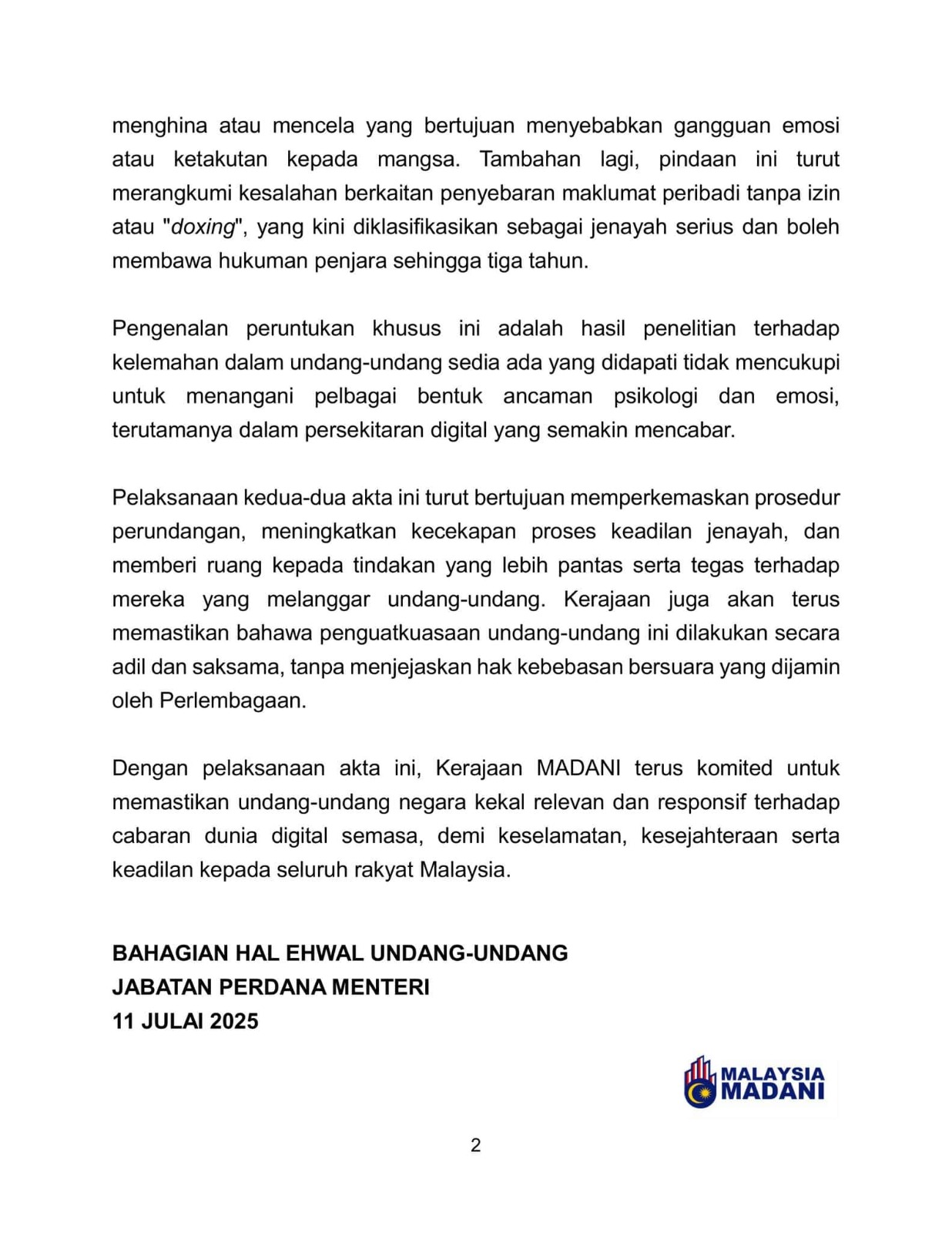
Every employee has the right to a safe working environment not only physically, but also emotionally and mentally. Since July 2025, Malaysia’s bullying‑law landscape has changed dramatically through amendments to the Penal Code.
1. Your Basic Rights As An Employee
You no longer need to just “endure it”. Your rights are protected by several key laws:
Penal Code (Amendment 2025): Under Sections 507B–507G, workplace harassment including verbal, psychological, and cyberbullying is now a criminal offence.
Occupational Safety and Health Act (OSHA 1994): The latest amendments require employers to safeguard employees’ psychological well‑being. Failure to do so can be treated as employer negligence.
Employment Act 1955: Gives you the right to work in an environment free from sexual harassment or discrimination that may lead to constructive dismissal.
2. Official Reporting Channels
Do not let your complaint stay unresolved. Use these channels according to how serious the case is:
Police report: If the bullying involves threats, extreme harassment, or cyberbullying, you have the right to file a police report directly, as these are now criminal offences under the Penal Code.
Internal HR & Union: Use internal HR and your union as an early record for disciplinary action against the bully.
MyHelp system (Health sector): Specifically for KKM staff facing psychological harassment; the MyHelp portal allows you to report bullying confidentially.
Important: Excuses like just joking or harsh joke are no longer accepted as a defence in court if they cause emotional suffering to the victim.
Conclusion: You Have the Right to Work in Peace
Workplace bullying is not just a “career challenge” that you have to swallow silently. It is a serious problem that can damage your mental health, self‑confidence, and future.
Remember these three key points:
Recognise the signs: Do not accept manipulation or sarcastic remarks as “normal office culture.”
Use your rights: Malaysian law is now stricter in protecting workers from emotional and mental harassment, including criminal‑code protections for bullying.
Mental health comes first: You can rebuild a career, but if emotional trauma is left untreated, it can take a long time to heal.
Do not keep suffering in silence. Keep evidence, seek support, and have the courage to speak up. You work to earn a living and build a life, not to be destroyed by a toxic environment.
You are not alone. Your voice matters.
Feeling Stuck in a Toxic Job? It’s Time to Move On.
Many people remain trapped in unhealthy work environments even though they’ve long planned to leave. Every morning starts with stress, and every week is just a countdown to the weekend. The truth is, you do not need to wait until burnout hits or until your self‑confidence collapses completely before seeking a fresh start.
How Can AI Help You Find a Healthier Job?
Scrolling through job portals one role at a time is exhausting, especially when you’re already mentally drained. With the AI Job Matcher tool, the job‑search process becomes much more efficient:
Accurate matching: The system matches your experience and skills with companies that are actively hiring.
Faster process: You don’t have to manually sift through thousands of job ads.
Wider opportunities: AI uncovers hidden roles you might otherwise miss.
Don’t let yourself stay trapped any longer. Drop your resume here now and let our smart system help you find a work environment that truly values your talent.
FAQ: Common Questions About Workplace Bullying
1. Is workplace bullying a legal offence in Malaysia?
Yes. Although the Employment Act 1955 does not explicitly use the word “bullying”, the Penal Code Amendment (July 2025) now classifies bullying and emotional harassment as criminal offences. In addition, the OSHA 1994 amendment obliges employers to provide a work environment that is psychologically safe.
2. How do I distinguish “bullying” from “normal work pressure”?
Normal work pressure is usually temporary and focused on tasks (for example, tight deadlines). Bullying, on the other hand, is repeated, targets the person, and systematically aims to degrade a worker’s dignity or emotionally pressure them.
3. Can I report my employer if I am being bullied?
Yes. You have the right to file a complaint with Human Resources (HR), the Labour Department (JTK), or make a police report if the harassment involves threats or extreme personal attacks under the new laws.
4. What are the long‑term effects of staying in a toxic environment?
It can cause deep psychological trauma such as severe anxiety, burnout, and depression. Career‑wise, it can shatter your self‑confidence so badly that you feel unable to succeed anywhere else.
5. What is the best way to protect myself from a bully?
Document evidence: Keep a log of dates, times, witnesses, and screenshots of messages/emails.
Set boundaries: Communicate in a professional but firm way.
Have an exit plan: Do not wait until your mental health collapses. Use tools like the AI Job Matcher to find opportunities in companies with healthier work cultures.