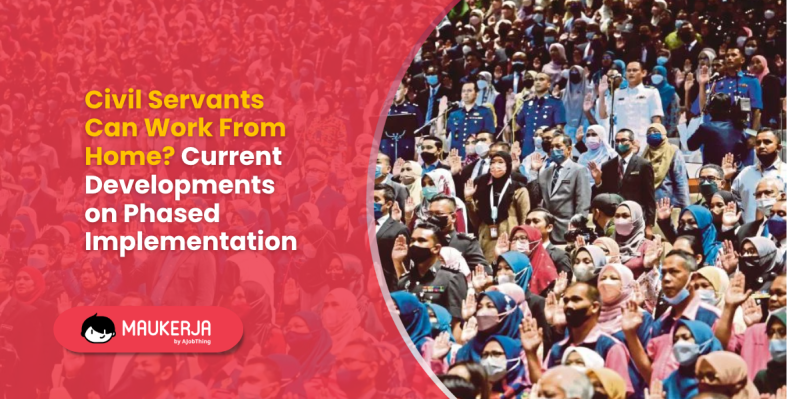
Civil Servants Can Work From Home? Current Developments on Phased Implementation
by Ani
Apr 5, 2026
pada 1:48 PM
Civil Servants Can Work From Home? Current Developments on Phased Implementation
The Malaysian government is now reviewing the implementation of more flexible work arrangements, including the option of Working From Home (WFH) for civil servants.
In a recent official statement, Prime Minister Datuk Seri Anwar Ibrahim stressed that this approach will not be introduced abruptly. Instead, it will be rolled out gradually and selectively, based on the needs of the public service.
Summary of WFH Implementation for Civil Servants
Not For Everyone: The WFH option is only available to positions or departments where the nature of the work can realistically be done remotely.
Productivity First: Assessments will be made to ensure that the quality of service delivery to the public is not compromised.
Phased Approach: Implementation will be carried out carefully, according to the suitability of each government agency’s function.
Main Objective: To modernise work culture in the public sector in line with global trends and to improve work–life balance for employees.
WFH Selectively: Which Civil Servants Are Likely Eligible?
The implementation of flexible work arrangements or Working From Home (WFH) for Malaysian civil servants will be rolled out in phases. The main focus is on positions or roles that do not compromise the quality of service delivery to the public.
Potential WFH Eligibility Criteria
Digital & Analytical Roles: Positions involving data management, programming, or analysis that can be performed fully using digital devices.
Document & Administration Units: Departments already using electronic document‑management systems and that do not require daily physical presence.
Hybrid Work Units: Departments with established technological infrastructure for hybrid work and stable online communication.
Non‑Counter Roles: Civil servants whose duties do not involve direct, face‑to‑face interaction with the public at counters will be prioritised.
Current Status: For now, official guidelines and full criteria are still under review by the government and have not yet been issued in detail.
Private Sector Encouraged To Adopt Flexible Work & WFH
In addition to changes in the public sector, the government is also calling on private sector employers to consider implementing flexible work arrangements, including Work From Home (WFH), more widely.
This move aims to align Malaysia’s work culture with global trends that prioritise output‑driven productivity over physical presence alone.
A Future‑Proof Work Strategy
Existing Success Stories: According to the Prime Minister, several corporate firms and financial institutions in Malaysia have already adopted this system with positive results on organisational performance.
More Than Just an Extra Perk: WFH is now seen as a strategic work approach to attract talent (talent acquisition) and retain high‑quality employees (retention).
Positive Impact: Flexible working has been proven to improve staff morale, reduce office operating costs, and contribute to better wor –life balance.
This call marks a major shift in the Malaysian career landscape. With the support of digital technology, WFH is no longer just a temporary option, but a key element in a modern, competitive work ecosystem.
What Are The Effects Of WFH On Workers & Employers?
The implementation of Work From Home (WFH) and flexible work systems brings a major shift in the modern work ecosystem. Here are the key impacts for both sides:
1. Benefits For Employees
Maximum Flexibility: Freedom to manage your own working hours and location based on personal needs.
Cost & Time Savings: Lower spending on fuel, tolls, and public transport, and no more time lost in traffic jams affecting mental well‑being.
Better Work‑Life Balance: More space to balance family responsibilities and career, leading to improved quality of life.
2. Advantages For Employers
Higher Productivity: Focus on results and output rather than just attendance at the office.
Lower Operational Costs: Reduced spending on office utilities, rental space, and facility maintenance.
Talent Attraction: Flexible work becomes a strong draw for young talent (Gen Z & Millennials) who prioritise work‑life balance as a career criterion.
Challenges & Requirements For Successful Implementation
To make WFH work well, both employers and employees must pay attention to three critical elements:
Digital Infrastructure: Stable internet and the use of cloud‑based collaboration tools (for example, video calls, shared drives, project management apps).
Transparent KPIs & Monitoring: Clear, fair performance‑measurement systems based on completed tasks and deadlines.
Self‑Discipline: Strong personal accountability so employees stay focused and productive even without in‑person supervision from managers.
Malaysia’s Economy 2026: Staying Stable & Resilient Amid Global Challenges
In a special address on 26 March 2026, Prime Minister Datuk Seri Anwar Ibrahim emphasised that Malaysia’s economy remains strong despite global uncertainty, including energy crises and geopolitical conflicts in the Middle East.
Main Pillars of National Economic Strength
Key Investment Destination: Malaysia continues to be a competitive and attractive destination for foreign and domestic investment, supported by a solid economic foundation and responsive government policy.
Controlled, Resilient Growth: Even as the world faces inflationary pressure and trade tensions, the domestic economy shows strong resilience, with an estimated growth of about 4.0% to 4.5% for 2026.
Governance Reform: The government is committed to reducing wastage and leakage, ensuring that every ringgit of national revenue delivers maximum impact to the rakyat.
The Link Between The Economy & WFH
The phased rollout of Work From Home (WFH) is not just a welfare measure; it is also an economic‑policy initiative designed to:
Improve Efficienty: Reduce dependence on physical infrastructure and lower office‑operating costs.
Maintain Labour Productivity: Ensure continuity of critical work even when external shocks (such as global energy crises) happen.
Build Crisis Preparedness: Serve as a proactive step to manage domestic energy‑supply challenges, which the government is monitoring closely.
Together, these moves signal that Malaysia is shaping a more flexible, resilient, and future‑ready economy in 2026.
Conclusion: WFH Is No Longer A Dream, Start Your Flexible Career Today!
The government’s review of civil service work systems proves that Work From Home (WFH) is now the future direction of careers in Malaysia. This trend is not limited to the public sector; the private sector is also actively offering flexible‑work opportunities to attract top talent.
Why You Should Act Now
Better Mental & Physical Well‑being: Reduce stress from traffic jams and save transport costs.
Output‑Based Productivity: Focus on the quality of work rather than just being physically present.
Global Career Opportunities: Many companies now look for candidates comfortable in a remote‑work ecosystem.
Find WFH Jobs On Maukerja!
Don’t wait until these opportunities are gone. If you are looking for a career that offers better work–life balance and flexible hours, Maukerja lists thousands of current WFH and hybrid‑job vacancies across Malaysia.
Join thousands of jobseekers who have already transformed their careers into something more flexible, comfortable, and future‑ready.
Frequently Asked Questions (FAQ) On The Implementation Of WFH In Malaysia 2026
1. Will all civil servants be allowed to work from home (WFH)?
No. The WFH arrangement for civil servants is being implemented in phases and selectively. It only applies to roles where service delivery to the public is not affected, depending on the specific needs of each department.
2. When does the official WFH for civil servants start?
As of March 2026, the government is still in the final evaluation stage via the National Economic Action Council (MTEN). No nationwide official date has been announced yet, but several pilot agencies have already begun testing hybrid‑work models.
3. Are private sector employers required to implement WFH?
No, it is not mandatory. However, the Prime Minister strongly encourages private‑sector employers to adopt this practice to support economic stability and workforce well‑being, in line with global work‑market trends.
4. What are the main benefits of WFH for workers in Malaysia?
Key benefits include flexible working hours and location, significant savings on commuting costs (petrol/tolls), and improved work–life balance and overall quality of life.
5. Is the WFH system suitable for all types of jobs?
No. Jobs that involve physical operations, direct counter services, and national security functions still require full physical presence to ensure smooth official operations and public‑service continuity.